Patients searching for teeth whitening Newburgh NY options often call in late November, wanting a brighter smile by New Year’s Eve. Teeth whitening is one of the few cosmetic treatments that can be completed in a single visit, but the result depends on how the appointment is timed around sensitivity, staining habits, and the restorations already in your mouth. Patients in Newburgh, New Windsor, Beacon, and Balmville frequently arrive with the same problem: too little time and too many events. This guide explains which whitening option fits a short timeline, how to prepare your teeth, and what to avoid so the result holds through December.
Table of Contents
- Quick Takeaways
- Why Timing Matters Before the Holidays
- In-Office vs Take-Home Whitening
- Preparing Your Teeth for Whitening
- Building a Holiday Whitening Timeline
- When Whitening Is Not Enough
- Choosing the Right Option for Your Timeline
- Maintaining Results Through the Holidays
- Frequently Asked Questions
- References
Quick Takeaways
| Key Insight | Explanation |
|---|---|
| Book whitening at least two weeks before your event | Sensitivity commonly appears within a day or two of in-office treatment and settles over several days. A final-week appointment leaves you managing pain during the event. |
| Clean the teeth before bleaching | A professional cleaning removes biofilm and surface stain so the gel contacts enamel evenly. Our in-office dental plan includes 2 Dental Cleanings for patients without dental insurance. |
| Existing fillings and crowns will not change shade | Whitening acts only on natural enamel and dentin. Composite fillings, crowns, and bridges keep their original shade, so mismatches often appear after treatment. |
| Retail strips are a weak choice for a deadline | One-size trays and low-concentration strips produce slower, patchier results and offer no clinical check for decay or gum inflammation. |
| Treat active decay and gum inflammation first | Untreated caries and bleeding gingiva increase gel penetration into sensitive tissue. Whitening on these teeth raises the risk of pain during the event. |
| Bonding or veneers handle stains that bleaching cannot lift | Deep intrinsic discoloration and dark composite margins respond poorly to bleaching. Bonding can often be completed in one visit, while veneers need lab time. |
| Schedule within our office hours | The office is open Monday to Friday, 9:00 to 5:30pm. Call (845) 562-1108 to book before the December schedule fills. |
Why Timing Matters Before the Holidays
Whitening works by oxidizing chromogens bonded to enamel and the underlying dentin, so the result depends on how much pigment is present and how clean the surface is when treatment starts. A procedure done three days before a family dinner leaves almost no margin for sensitivity. Pigment added in the following days can also erase part of the gain before the event is over.
Late November is a poor starting point for many patients. Our office is open Monday to Friday from 9:00 to 5:30pm, so the practical window before a weekend event is shorter than it looks on a calendar. December schedules fill quickly, and patients who wait until mid-month often choose between a rushed appointment and no treatment before the holidays.
Realistic Expectations for Shade Change
Shade gain varies with the starting color, enamel translucency, and the type of stain. Extrinsic stain from coffee, tea, and tobacco typically responds well to bleaching. Intrinsic discoloration, such as tetracycline staining acquired in childhood or discoloration after trauma, responds less predictably and may require a restorative solution.
Whitening is a chemical process with a predictable ceiling. The patient who arrives with a clean, healthy mouth and a realistic shade target almost always leaves with the better result.
Ask for a specific shade target at the consultation. Requesting “as white as possible” is the most common source of disappointment, and it often pushes patients toward longer or more aggressive protocols that increase sensitivity. A defined target, measured against a shade guide before treatment, keeps the expectation and the outcome aligned.
In-Office vs Take-Home Whitening
The main distinctions are who controls the application, the concentration of the active agent, and how long the result takes to appear. Professional options use gels considerably stronger than retail products, and the clinician can isolate the gingival tissues during application. Retail strips and generic trays use a single form for every mouth, which produces uneven tray contact and slower, patchier results.
Chairside Whitening and Gingival Protection
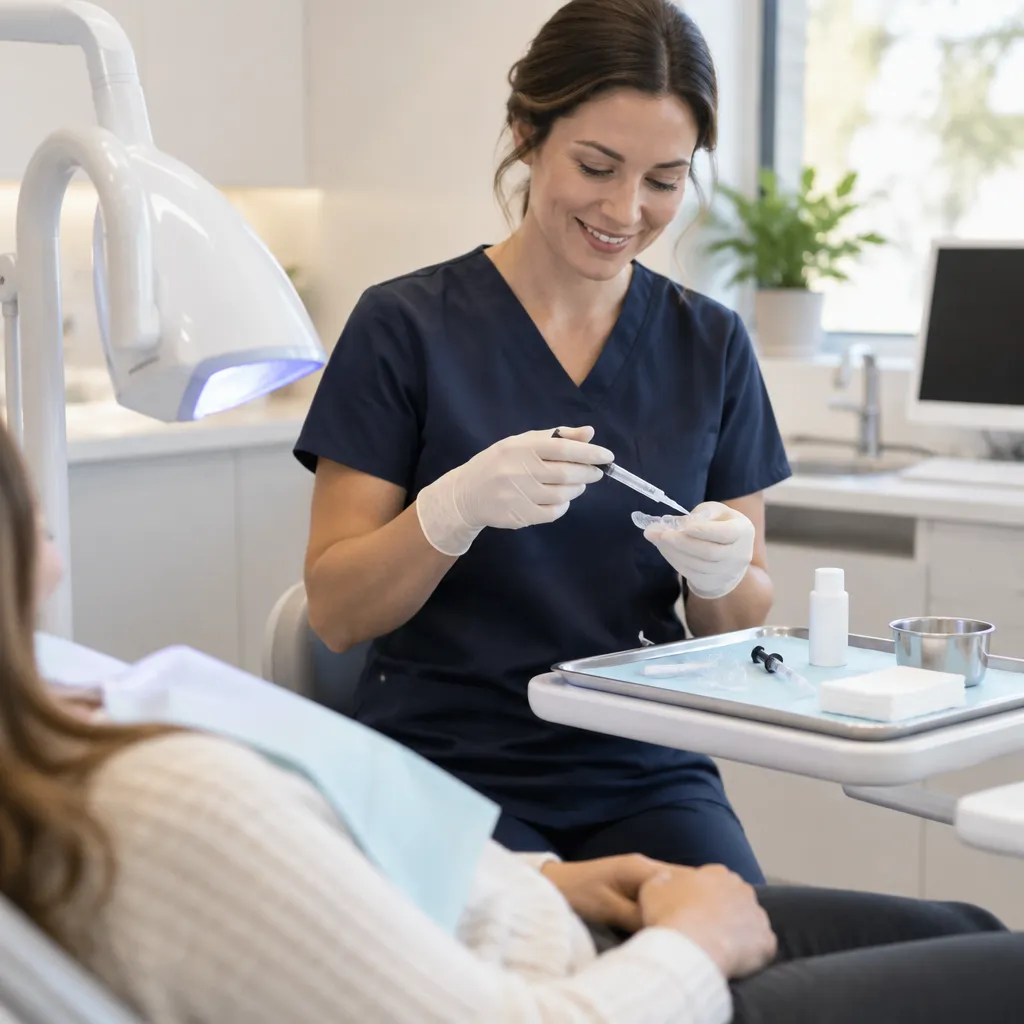
Chairside whitening is completed in one visit. The gingiva is protected with a barrier before the gel is placed, and the operator monitors the process rather than leaving the patient to manage it alone. Because the application is supervised, the clinician can pause treatment when sensitivity rises, which is the main safety advantage over unsupervised use.
The trade-off is cost per session and the fact that a single appointment may not deliver the full shade a patient expects. Many patients need a second session or a maintenance tray to reach their target. Build that into the timeline rather than treating the first appointment as the final result.
Custom Take-Home Trays and Lead Time
Custom trays are fabricated from impressions, so they require laboratory time. That makes them a poor match for a deadline of less than several weeks. Once fitted, the tray is worn at home with a lower-concentration gel, which is generally more gentle on sensitive teeth. Manufacturers such as Opalescence sell prefilled trays and gel refills directly to consumers, and their catalog describes the products as created by dentists for dentists. A prefilled tray does not replace a fitted tray, but it works as a maintenance option once the in-office result is set.
| Approach | Strengths | Limitations |
|---|---|---|
| In-office chairside whitening | Single visit, supervised, gingival barrier applied, fastest visible change | Higher cost per session, sensitivity may need management, a follow-up session is sometimes needed |
| Custom take-home trays from the dentist | Tray fits the arch, controlled use at home, lower concentration suits sensitive patients | Requires impressions and lab time, several weeks of wear, depends on patient compliance |
| Over-the-counter strips and generic trays | Low upfront cost, no appointment needed | One-size fit, uneven results, no clinical check for decay or gum inflammation, weakest on deep stains |
Pro tip: If your event falls on a weekend, complete chairside whitening by Wednesday of the prior week. That leaves the final days for sensitivity to settle rather than for managing pain during the event itself.
Preparing Your Teeth for Whitening
Preparation determines how evenly the gel penetrates. Plaque and calculus act as a physical barrier, and surface stain sits on enamel where it can be removed without bleaching. For that reason, a professional cleaning should come before whitening, not after. Patients who arrive with heavy calculus often see uneven results on the lower anterior teeth, where calculus accumulates most.
Professional Cleaning Comes First
A routine dental cleaning removes the biofilm and extrinsic stain that would otherwise sit between the gel and the enamel. Our in-office dental plan for patients without dental insurance includes 2 Diagnostic Exams, 2 Routine X-Rays, 2 Dental Cleanings, and 15% off all services, subject to plan terms. The cleaning also gives the clinician an opportunity to assess the gingiva for inflammation before any gel is placed.
Schedule the cleaning several days before the whitening appointment rather than on the same morning. Gingiva that is actively bleeding or recently scaled tends to irritate more readily when a whitening gel contacts it, and a short interval allows the tissue to settle.
Restorations That Will Not Lighten
Whitening agents act on natural tooth structure only. Composite fillings, porcelain crowns, and bridges keep their original shade, so bleaching a mouth with several large restorations can produce visible mismatches. The usual sequence is to whiten first, then replace or match restorations, and that decision should be made before the event, not after it.
Front-tooth composites are the most common problem. A shade difference that was invisible before treatment becomes obvious once the adjacent enamel lightens. Review your restorations at the exam, and read more about our approach to dental fillings if an older composite is visible in photos.
Sensitivity and Active Decay
Untreated caries, exposed root surfaces, and cracked teeth allow the gel to reach the pulp and cause pain. Those conditions should be treated first. A tooth with unexplained sensitivity should not be whitened until the cause is confirmed, because whitening will not correct the problem and will likely intensify it.
Pro tip: Start a potassium nitrate desensitizing toothpaste about a week before whitening and continue it for several days afterward. Starting before the appointment is more effective than waiting for pain to begin.
Building a Holiday Whitening Timeline
Work backward from the event date rather than forward from the calendar. For an event that falls on a weekend, the working plan is an exam and cleaning in the first half of the month, whitening once restorations have been assessed, and a buffer of at least two weeks before the gathering. The buffer is deliberate, because it gives sensitivity time to resolve and leaves room for a corrective appointment if the shade drifts.
Working Backward From Your Event Date
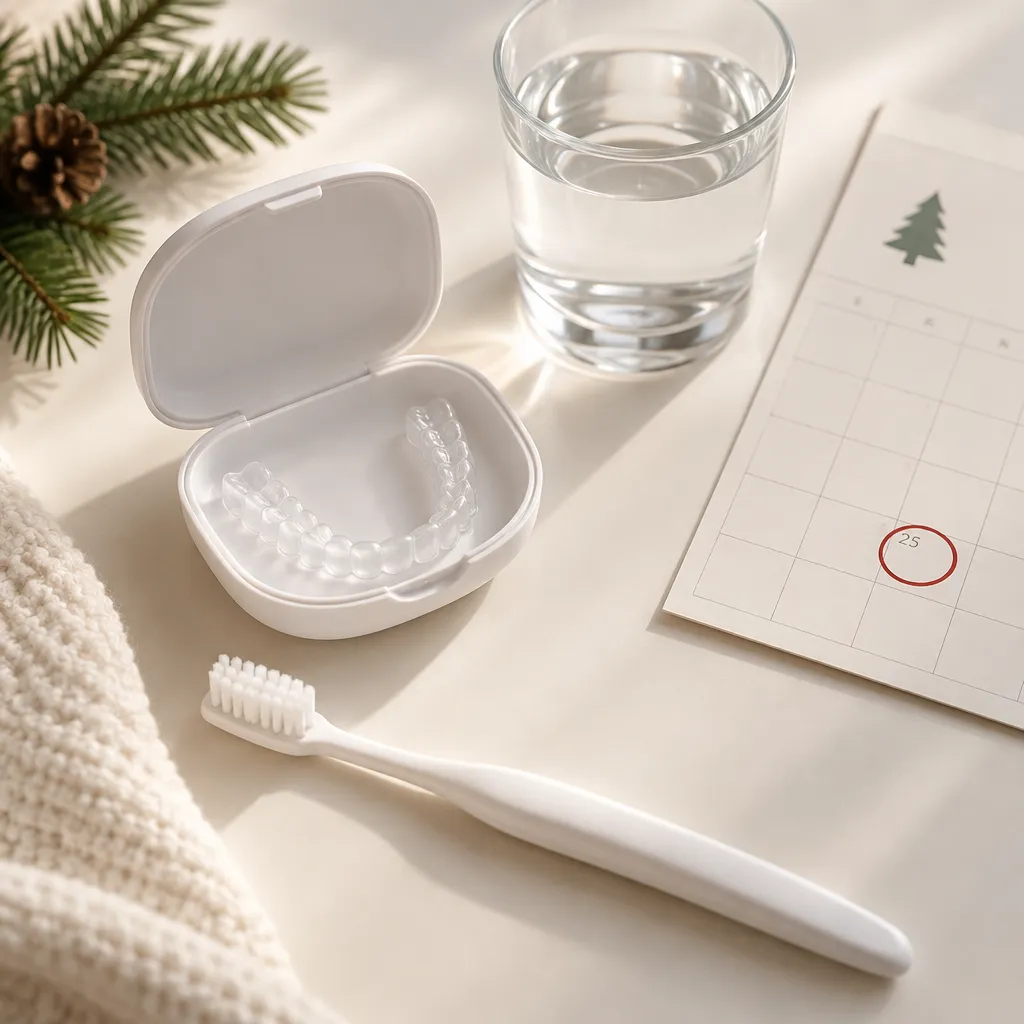
Consider a patient hosting a family dinner on Saturday, December 19, 2026. An exam and cleaning in the first week of December allows the clinician to identify restorations and decay in advance. Whitening can follow in the week of December 7, which leaves roughly the final ten days for sensitivity to settle and for any maintenance tray to be used if needed.
Shade drift is the main risk during that window. Patients who whiten and then drink coffee, tea, or red wine in the days immediately after treatment often lose part of their result before the event. Ask at the appointment which foods to limit during that window, and keep the instructions in writing.
Thanksgiving Week and Weekend Events
Thanksgiving falls on November 26, 2026, so the first full week of December is the earliest practical window for a whitening plan with a two-week buffer before mid-December. Our office is open Monday to Friday, 9:00 to 5:30pm, and does not offer weekend appointments. If your event is on a Saturday or Sunday, the appointment must fall earlier in the week, which means there is no weekend slot to correct a problem. Call (845) 562-1108 to schedule.
When Whitening Is Not Enough
Some discolorations do not respond to bleaching. Deep intrinsic staining, fluorosis, and dark composite margins are the usual candidates. In these cases, a restorative approach produces a more predictable result than extending the whitening protocol, which mainly increases sensitivity without reaching the target shade.
Bonding for Localized Discoloration
Dental bonding places composite resin on the tooth and shapes it to mask a localized stain, a chipped edge, or a small gap. It can often be completed in one visit without laboratory time, which makes it the most practical option when the calendar is tight. Bonding does not lighten the surrounding enamel, so the resin shade must be matched to the whitened teeth. Whiten first, then bond.
Veneers for Deep or Intrinsic Staining
Veneers are thin shells bonded to the facial surface of the tooth. They suit deep intrinsic staining that bleaching cannot reach, and they can address shape and spacing in the same plan. Veneers require enamel preparation and laboratory fabrication, so they are not a last-minute solution. For the holidays, the realistic use is a long-term plan rather than a fix for December.
Crowns and Fillings That Need Shade Matching
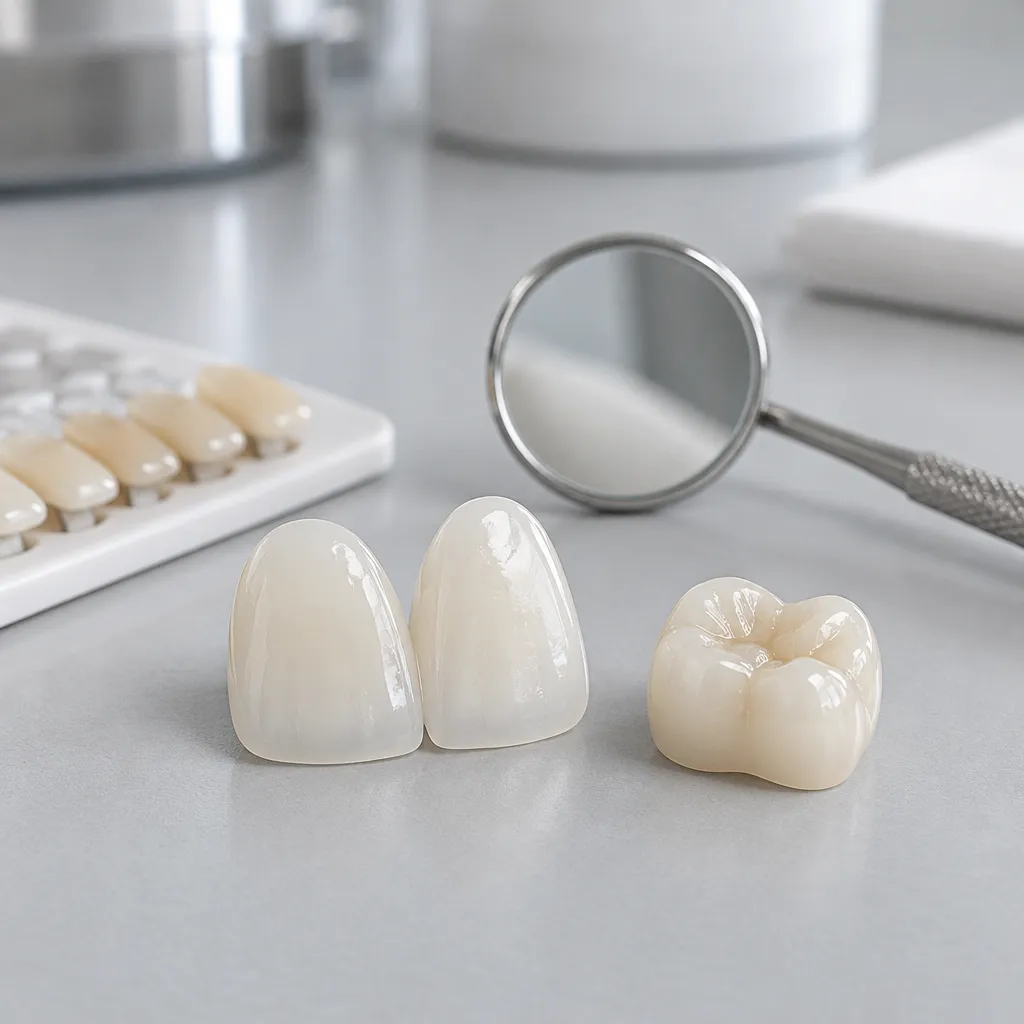
When a crown or a large filling is visible in the smile, a whitened adjacent tooth can make the restoration look mismatched. In these cases, the restoration may need to be replaced to match the new shade. Review the options for dental crowns in Newburgh, NY at the consultation, since the decision depends on the restoration’s age, margins, and location.
If you are in treatment with Invisalign Clear Aligners, confirm the sequence before you start. Whitening can change the fit or wear pattern of trays, so time the whitening and aligner stages together rather than assuming they can run in parallel.
Choosing the Right Option for Your Timeline
The correct option depends on how many weeks remain. Each timeline favors a different approach, and choosing the wrong one usually means either a result that does not reach the target shade or sensitivity that peaks during the event. The three windows below cover the decisions patients most often face.
Three to Four Weeks Out: Custom Trays or Chairside Whitening
With three to four weeks available, both chairside whitening and custom trays are workable. Chairside whitening delivers the faster visible change and suits patients with stable, healthy teeth. Custom trays suit patients whose sensitivity is a concern or who want to whiten gradually at home, because the lower-concentration gel is applied over a longer period.
Under Two Weeks: Chairside Whitening Only With Clean Teeth
With less than two weeks, chairside whitening is the only realistic choice, and only if the teeth are clean, the restorations have been assessed, and no active decay or gum inflammation is present. Custom trays cannot be fabricated in that window. If the exam reveals any of those conditions, postpone whitening until after the event rather than accepting a compromised result.
Under Seven Days: Bonding, Not Bleaching
Within seven days of an event, bleaching carries a high risk of sensitivity during the gathering, so bonding or a cosmetic adjustment is the safer choice for a visible flaw. Bonding can be placed and polished in one visit, and its shade can be matched to the existing teeth. This approach addresses the specific problem without introducing a new variable into the final week.
Maintaining Results Through the Holidays
Holiday meals are the main threat to a fresh result. Dark, acidic, and tannin-rich foods and drinks, including red wine, coffee, cranberry sauce, and dark sodas, deposit chromogens onto enamel that is temporarily more receptive after bleaching. The effect is greatest in the first few days after treatment.
Pigment-Heavy Holiday Foods
Timing matters more than total volume. A glass of red wine at a dinner on the day after treatment does more damage than the same glass two weeks later. Rinse with water after dark beverages, use a straw for dark drinks where practical, and avoid brushing immediately after acidic foods, since enamel softens briefly after an acid challenge.
Tobacco reverses results quickly and is the single most common reason a whitening result fades faster than expected. Patients who smoke should expect a shorter-lived result and plan a touch-up sooner.
Touch-Up Sessions After the Holidays
Plan a touch-up in January rather than in the week of the event. At that point, the office can assess whether the shade has drifted and recommend a refresh with a maintenance tray or a short in-office session. Patients without dental insurance can review the in-office dental plan, which includes 15% off all services, subject to plan terms. For a broader review of your oral health before the new year, see our general dentistry services.
Pro tip: Schedule the January touch-up before you leave the whitening appointment. Booking a specific date at that visit is the most reliable way to keep the result from drifting back through the winter months.
If whitening causes tooth pain that persists beyond a few days, call the office at (845) 562-1108. For a serious medical emergency, call 911.
Frequently Asked Questions
How far before a holiday event should I whiten my teeth?
Book the whitening appointment at least two weeks before the event. That window allows sensitivity to settle and leaves time to correct a shade mismatch with restorations if one appears.
Will teeth whitening lighten my existing fillings or crowns?
No. Whitening agents act only on natural enamel and dentin, so composite fillings, crowns, and bridges keep their original shade. Evaluate these restorations before treatment so any replacements can be planned in advance.
Is professional teeth whitening safe if my teeth are sensitive?
It can be, provided the cause of sensitivity is identified first. Untreated decay, exposed roots, and cracks should be addressed before whitening, and a custom tray with a lower-concentration gel is often the better choice for sensitive patients.
How much does professional teeth whitening cost at your office?
Whitening pricing depends on the option selected and the findings of your exam, so call (845) 562-1108 for a current quote. Patients without dental insurance can also review the in-office dental plan, which includes 2 Diagnostic Exams, 2 Routine X-Rays, 2 Dental Cleanings, and 15% off all services, with plan terms that apply.
Can I whiten my teeth if I have gum disease?
Not until the gum disease has been treated. Inflamed or bleeding gingiva is more prone to irritation from whitening gels, so the underlying condition should be stabilized first. Our dental care team will determine the correct sequence during the exam.
What should I do if whitening causes tooth pain?
Call the office at (845) 562-1108 if the pain is severe or lasts beyond a few days. For a serious medical emergency, call 911.
Tell us about your own holiday whitening experience, including any sensitivity or timing problems you ran into, so we can address those questions in future guidance.
We would love your feedback and any insights you would share with others. What perspective would you add?