Thanksgiving dental health depends less on any single dish than on how long sugars and starches stay in contact with enamel. A holiday meal can deliver more fermentable carbohydrate in one afternoon than many people eat in a typical week, and several traditional dishes are sticky, starchy or acidic. This article identifies the foods that cause the most trouble, explains the mechanism behind each one, and offers substitutions and timing adjustments. The goal is not to skip the table but to control exposure.
Table of Contents
- Quick Takeaways
- How Thanksgiving Foods Affect Teeth
- Savory Sides That Stick
- Mashed Potatoes, Gravy and Candied Yams
- Cranberry Sauce and Pumpkin Pie
- Comparing Holiday Eating Patterns
- Healthier Swaps for the Thanksgiving Table
- What to Do After the Meal
- Dental Care in Newburgh for Holiday Concerns
- Frequently Asked Questions
- References
Quick Takeaways
| Key Insight | Explanation |
|---|---|
| Retention drives risk | Sticky foods such as candied yams, green bean casserole and caramel-based desserts cling to enamel and pits longer than most foods, extending acid exposure. |
| Starch behaves like sugar | Mashed potatoes and white pasta break down into fermentable sugars that cavity-causing bacteria metabolize. |
| Serve dessert with the meal | A dessert eaten with the meal is a short, defined exposure. Grazing across the afternoon keeps the mouth under a sustained acid challenge. |
| Cranberry sauce combines acid and sugar | Cranberries are naturally tart, so sugar is usually added, producing a sauce that is both acidic and sticky. |
| Dairy offsets some of the risk | Cheese supplies calcium and phosphorus and can help neutralize acids in the mouth, making dairy-based sides a comparatively favorable choice. |
| Rinse and floss after the meal | A water rinse and interdental cleaning remove turkey, bean and berry fragments before they feed bacteria overnight, when saliva flow is lowest. |
How Thanksgiving Foods Affect Teeth
Tooth damage from a holiday meal follows a predictable sequence. Fermentable carbohydrates reach the biofilm on tooth surfaces, cavity-causing bacteria metabolize them, and the resulting acid lowers pH at the enamel surface. The duration of that acid exposure, more than the sugar content of any single bite, determines how much mineral is lost.
That is why the useful question is rarely whether a dish is sweet. The better question is how long it stays in the mouth and how often you return to it. A slice of pie eaten at the end of dinner and followed by water is a short exposure, while the same pie nibbled over three hours is a sustained challenge.
Retention time matters more than sugar content
Retention is the variable most people overlook. Sticky foods adhere to pits, fissures and the gumline, where they remain after the meal ends. The ADA’s MouthHealthy review of holiday dishes makes the same point, noting that sticky foods can damage teeth because they tend to stay on teeth longer than other foods.
Saliva clears most food through swallowing and buffering, but its flow drops after a meal and during long grazing sessions. Dishes that cling extend the period in which bacteria have substrate and surface pH stays depressed.
Eating with the meal versus grazing
Timing is the lever you control most easily. Saliva production rises during chewing, so a dessert served with the main course benefits from the same clearance that works on the savory dishes around it. Repeated snacking from open platters across the afternoon removes that benefit, and it is the pattern that most often produces new sensitivity after the holiday.
Pro tip: Set one dessert time, serve it with or immediately after the meal, and keep the rest of the afternoon free of snacks. A single defined exposure is far easier to clean up than a series of small ones.
Savory Sides That Stick
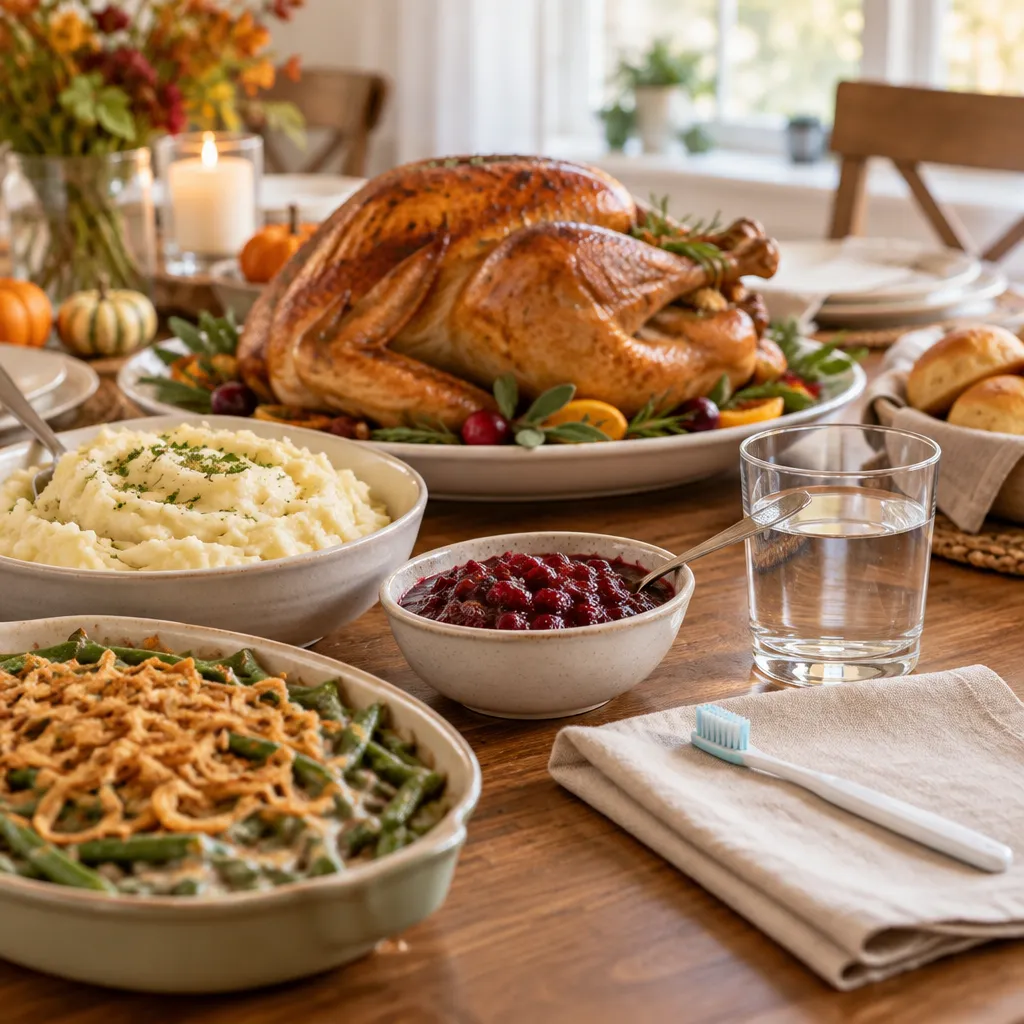
Savory dishes are often assumed to be safe because they contain little added sugar. The actual problem is texture and composition. Casseroles and cheese sauces combine stickiness, starch and small particles that lodge in interproximal spaces, and those particles stay put longer than sugar dissolved in a drink.
Green bean casserole and fragment lodging
Green bean casserole illustrates the problem well because it carries several risks at once. Dr. Kim Harms, an ADA spokesperson, notes that the dish can be sticky and that little beans may get stuck between teeth. The vegetables themselves are a benefit, so the issue is clearance rather than the ingredients.
Fried onion toppings and creamy binders add retention to an already fragmenting dish. In practice, patients who eat this casserole and then brush often still have fragments in proximal contacts. Flossing, not brushing alone, is the step that addresses this.
Macaroni and cheese: starch, calcium and the rinse
Macaroni and cheese has a more mixed profile. Cheese supplies calcium and phosphorus, and dairy is one of the more favorable components on the table. Dr. Harms has said that good cheese can be gooey, and that gooeyness is what keeps it in contact with enamel.
White pasta adds starch that breaks down into sugars, so a large portion means a longer exposure. The practical adjustment is portion control followed by a water rinse, not avoidance of the dish.
Retention and clearance, not the presence of a single ingredient, determine how much a holiday dish affects the mouth.
Mashed Potatoes, Gravy and Candied Yams
Starchy root vegetables are where nutritional value and cariogenic risk overlap. Sweet potatoes provide vitamins A and C, which the ADA’s review associates with healthy gums, while candied preparations add sugar and marshmallow that change the risk profile entirely.
Mashed potatoes and gravy
Dr. Harms notes that potatoes are an important dietary source of vitamin C, B6 and potassium. The concern is starch. Starch breaks down into sugars that cavity-causing bacteria use, and thick mashed potatoes cling to tooth surfaces, which lengthens that exposure.
Gravy changes the calculation. Dr. Harms’s assessment is that if the potatoes are covered with gravy, the health benefits of the overall dish are diminished to some extent. Use gravy as a finishing spoonful rather than a pool, and the potato portion becomes a far more manageable exposure.
Candied yams and marshmallow retention
Candied yams combine two risks: added sugar and a marshmallow topping that is sticky and slow to clear. The MouthHealthy review specifies that sticky foods stay on teeth longer than most others, which is the central problem with this dish. The practical answer is a smaller portion, served with the meal and followed by water.
Plain roasted sweet potatoes keep the vitamin profile and remove the marshmallow problem entirely. For many households, that single substitution is the most useful change at the table.
Cranberry Sauce and Pumpkin Pie
Cranberry sauce and pumpkin pie are the two dishes most often eaten with sugar and acid at the same time. Both are served in quantity, both are tied to the holiday, and both combine several of the risk factors discussed above.
Cranberry sauce: acid and sugar in one spoonful
Cranberries are naturally tart, so sugar or sugar substitutes are usually added. The result is a sauce that is acidic and sticky at once. The ADA review notes that the berries can lodge between teeth and that the dish is best eaten with a meal rather than alone.
One dental practice’s guidance for children describes cranberry sauce as a contributor to tooth decay when it contains added sugar. For adults, the principle is the same. A spoonful served with turkey is a far smaller exposure than a bowl eaten over the course of an evening.
Pumpkin pie and the whipped topping
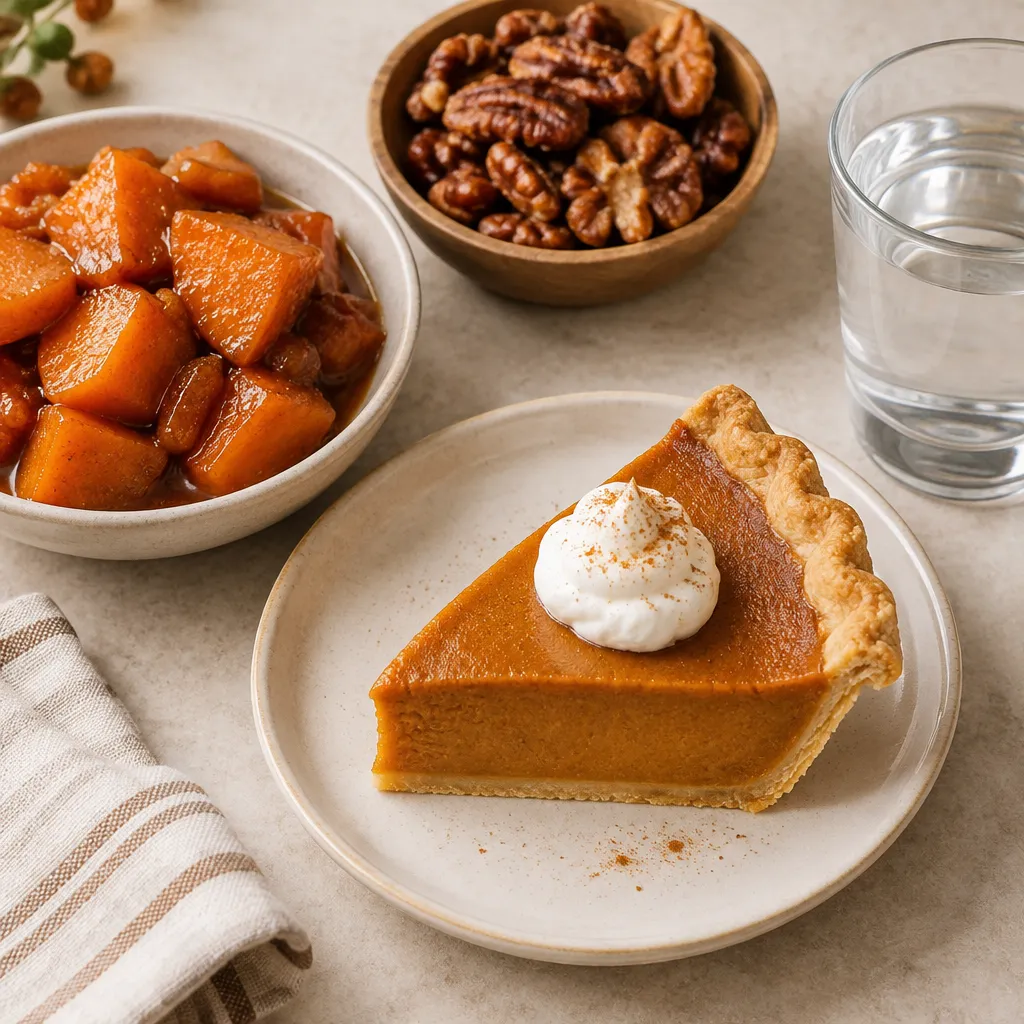
Pumpkin contributes vitamin A, which supports gum health and the mineralized structure of enamel. The concern is the sugar in the crust and filling, plus any sweetened whipped topping added on top. A sugary filling with a dairy topping is a sustained, sugar-rich exposure.
Serve pie once, after dinner, and avoid returning to it. The ADA’s MouthHealthy guidance recommends eating sweets shortly after meals, which helps keep saliva flowing to wash away leftover food.
Comparing Holiday Eating Patterns
Most households will not change what they serve, but many can change how they eat it. The table compares three patterns common at family gatherings, using retention, saliva clearance and total exposure as the criteria.
| Eating Pattern | Main Risk | Practical Adjustment |
|---|---|---|
| Dessert served with the meal | Short, defined exposure while saliva flow is elevated | Keep portions small, follow with a water rinse, and floss before bed |
| Grazing from sides through the afternoon | Sustained acid challenge with reduced saliva flow between bites | Plate one serving of each dish and clear the table rather than leaving platters open |
| Sticky dishes eaten alone | Retained sugar and fragments with no food to dilute them | Pair sticky dishes with turkey or vegetables and avoid treating them as a standalone snack |
The first pattern carries the lowest risk because the meal itself stimulates saliva. The second is the one most likely to produce new cavities, since it combines frequent sugar exposure with the drop in flow that follows eating. The third is less obvious but matters, because a spoonful of sticky dish with nothing else to dilute it stays on the enamel longest.
Healthier Swaps for the Thanksgiving Table
Substitution works best when it keeps the dish familiar and removes the specific mechanism of harm. The swaps below address retention, acid and sugar load rather than eliminating foods that most families expect on the table.
Vegetables and dairy that support enamel
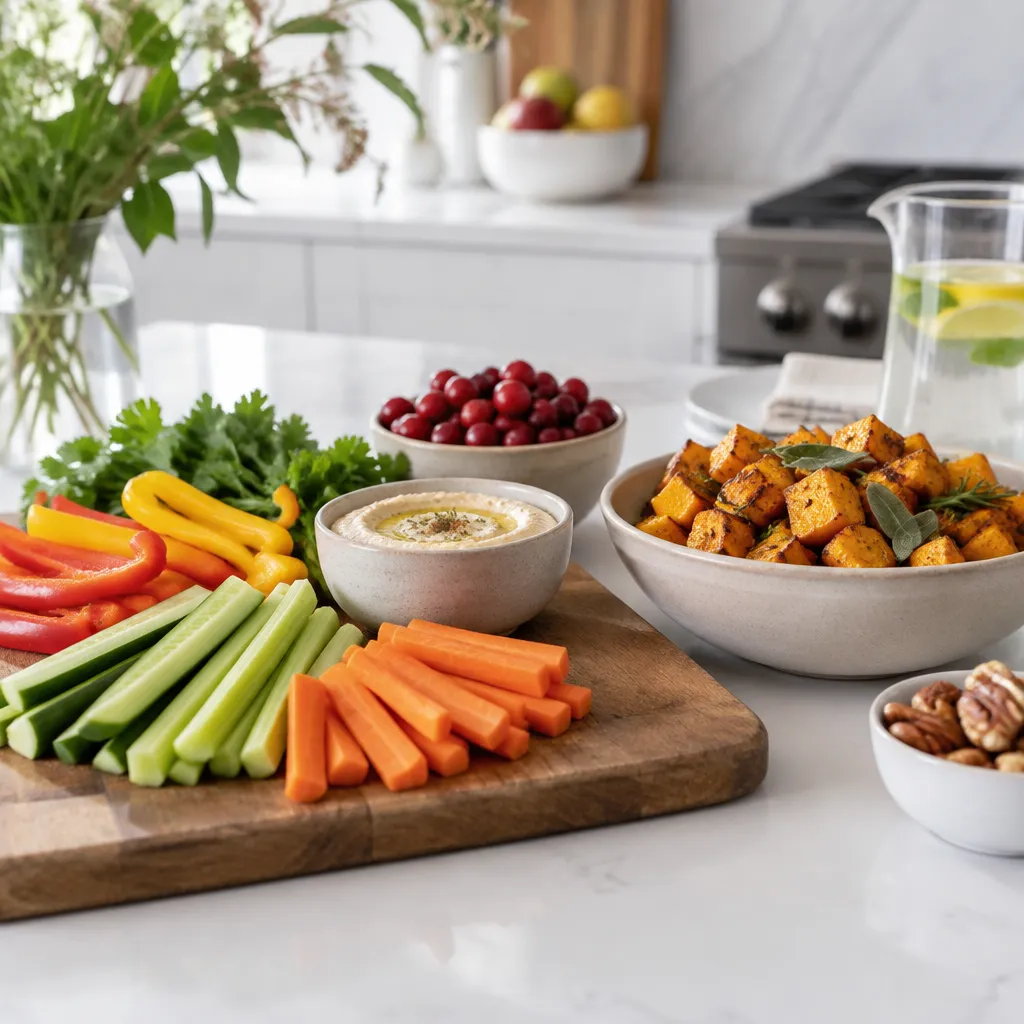
Steamed carrots, green beans and broccoli provide vitamins and minerals that support healthy teeth and gums, according to one dental practice’s guide for children. Dark leafy greens supply vitamins A, C and K, along with calcium, which a dental hygiene resource links to gum and enamel health. A green side adds fiber and a less sticky texture to the plate.
Dairy is the other reliable option. Cheese, served as a slice or as a sauce in moderation, contributes calcium and phosphorus. It works best as part of the meal rather than as a snack after dessert.
Dried fruit and other false substitutes
Dried fruit is often presented as a healthy replacement for dessert, but its texture is the problem. Raisins and other dried fruits stay sticky and allow sugars to remain on teeth. A fresh fruit platter serves the same purpose with far less retention.
Sugar-free sauces and desserts reduce one variable, but they can still be sticky or acidic. Judge them by retention and acid content rather than by the label alone. Removing sugar does not cancel stickiness.
What to Do After the Meal
The meal is only part of the exposure. What happens in the hour after the last plate is cleared affects how much residue remains overnight, when saliva flow is at its lowest and protection is weakest.
Water rinse and brushing timing
A water rinse after eating dilutes and removes residual sugars and fragments without adding exposure. The ADA’s guidance stresses drinking plenty of water with a meal to help wash away leftover food, which is the core of this step.
Brushing right after acidic foods such as cranberry sauce is a mistake, because enamel is temporarily softened. Rinse first, allow saliva to recover, and then brush with fluoride toothpaste.
Pro tip: Keep a water glass at each place setting and a floss pick in the kitchen drawer. Both steps cost nothing and address the turkey and bean fragments that brushing alone tends to miss.
Flossing turkey and bean fragments
The most direct instruction in the ADA material is that turkey can get stuck between teeth and that flossing helps. Interdental cleaning clears the fragments that lodge in tight contacts. Treat it as part of the cleanup routine rather than an optional extra, and do it before bed on the night of the meal.
Dental Care in Newburgh for Holiday Concerns
Dr. Michael Koumas has more than 25 years of experience, and our Newburgh practice is located at 4 Hudson Valley Professional Plaza #1, Newburgh, NY 12550. We welcome patients from Newburgh, Beacon, Balmville, New Windsor and surrounding communities. The office is open Monday to Friday, 9:00 a.m. to 5:30 p.m.
Dental emergencies after the holiday
A cracked tooth from a hard bite, a loose crown after sticky food, or new swelling near a previously treated tooth needs prompt assessment. Call (845) 562-1108 for dental emergencies. For serious medical emergencies, call 911.
Sticky foods can dislodge crowns and bonded restorations, so check any restoration that causes pain or new sensitivity after the meal. Calling the office first is the fastest way to determine whether the visit is urgent.
Booking a visit after the holiday
With Thanksgiving only days away, scheduling a cleaning in the weeks that follow gives your dentist a current baseline and a chance to address early retention problems before the sugar-heavy season continues. For patients without dental insurance, the in-office dental plan includes two diagnostic exams, two routine x-rays, two dental cleanings and 15% off all services. Terms and conditions apply, so call the office for details.
Frequently Asked Questions
Which Thanksgiving food is worst for teeth?
No single dish dominates, but sticky, sugar-rich foods with long retention carry the highest risk. Candied yams with marshmallow and caramel-based desserts rank high, and cranberry sauce is a close third because it combines sugar with acid.
Is turkey good for teeth?
Turkey is rich in protein and phosphorus, which support healthy tissues. Its fibers can lodge between teeth, so floss after eating it rather than relying on brushing alone.
Should I skip dessert to protect my teeth?
No. Serve one dessert with the meal, follow it with water, and avoid grazing on sweets through the afternoon. A defined exposure is far less harmful than repeated small ones.
Are dried fruit and sugar-free desserts safe alternatives?
Dried fruit is sticky and allows sugars to remain on teeth, so it is not a clean substitute. Sugar-free desserts reduce one variable but may still be sticky or acidic, so assess retention and acid content as well as sugar.
Can mashed potatoes damage teeth?
Potatoes are starchy, and starch breaks down into sugars that cavity-causing bacteria use. Limit gravy and sticky toppings, serve a moderate portion, and rinse with water after the meal.
When should I call a dentist after the holiday?
Call (845) 562-1108 for any dental emergency, including a cracked tooth, a loose crown or new swelling. Routine concerns such as sensitivity or lingering food debris are best addressed at a scheduled visit.
Share with our front desk which holiday dish gives your family the most trouble and which adjustment has worked best for you.
We would love your feedback and any insights you would share with others. What perspective would you add?