A chipped incisor at the holiday table or a tooth knocked loose during a family game rarely happens at a convenient time. Holiday meals, unfamiliar foods, travel, and changed office schedules all raise the odds of a cracked, dislodged, or fractured tooth. The first hour after an injury determines much of the outcome, and knowing which problems need same-day care and which can wait for a routine visit prevents both unnecessary root canals and lost teeth. This guide explains how an emergency dentist in Newburgh, NY triages common tooth injuries, what to do before you arrive, and how to reach our office during the holiday period.
Table of Contents
- Quick Takeaways
- Triaging the Injury in the First Hour
- Chipped and Fractured Teeth
- Knocked-Out and Displaced Teeth
- Restorations That Come Loose
- Soft Tissue Injuries and Bleeding
- Holiday Timing and After-Hours Access
- Comparing Temporary and Definitive Treatment
- Frequently Asked Questions
- References
Quick Takeaways
| Key Insight | Explanation |
|---|---|
| Bleeding that will not stop is an emergency | Apply firm gauze pressure for about 10 minutes before checking again. If bleeding continues, or pain is not relieved by over-the-counter medication, call the office the same day. |
| A knocked-out permanent tooth is time-sensitive | Hold the tooth by the crown, never the root. Keep it moist in milk or saliva and reach a dentist as quickly as possible, since time out of the socket drives the prognosis. |
| Save every fragment of a chipped tooth | Rinse broken pieces gently with water and bring them to the appointment. A clean fragment can sometimes be bonded back, which preserves more natural enamel than a full restoration. |
| A lost crown needs prompt replacement | Do not use household adhesives on a crown or fill the hollow tooth with unknown materials. Keep the crown, avoid chewing on that side, and schedule an appointment. |
| Never place aspirin against the gum | Aspirin placed directly on gum tissue can cause a chemical burn. Use oral acetaminophen, ibuprofen, or naproxen as directed on the label instead. |
| Facial fractures go to the emergency room | A broken jaw, facial bone fracture, or swelling that compromises breathing requires emergency medical care. For serious medical emergencies, call 911. |
Triaging the Injury in the First Hour
Most dental injuries fall into two categories: problems that threaten the tooth or its supporting tissues, and problems that only cause discomfort. The first group is time-dependent. A knocked-out permanent tooth, a deep fracture exposing pulp, and an abscess with spreading swelling all need treatment quickly, while a small enamel chip without sensitivity can usually wait for a scheduled visit. Sorting the injury into the right category early is the most useful thing a patient can do before arriving at the office.
Start with a direct assessment. Rinse the mouth with warm water, look for bleeding, and check whether the tooth is loose, displaced, or sitting at a different height from its neighbors. Use dental floss to remove any lodged food, since trapped debris can irritate the tissue and mask the true extent of a fracture. Avoid probing the injured area with a fingernail or sharp object.
Red flags that call for same-day care
Bleeding that persists after 10 minutes of gauze pressure, pain that does not improve with medication, and swelling of the face or jaw all warrant a same-day call. A severe toothache that worsens when lying down, or a tooth that has visibly shifted position, suggests pulpal or periodontal involvement. Any of these findings should be reported to the office when you call, because they change how the appointment is scheduled.
Pro tip: Note the time of the injury and describe exactly what happened when you call. Whether the tooth was struck, bitten on something hard, or displaced matters for how the team plans the visit and which imaging is needed.
When the emergency room is the right choice
Broken facial bones, injuries that affect the airway, and bleeding that cannot be controlled belong in an emergency department. Dental offices treat injuries to the teeth and supporting structures, but they are not equipped to manage facial trauma with a compromised airway. For serious medical emergencies, call 911 first.
Chipped and Fractured Teeth
Chips and fractures vary widely in depth and clinical significance. A minor enamel chip with smooth edges and no sensitivity is primarily a cosmetic and surface concern. A fracture that extends into dentin, or a crack that runs below the gumline, changes both the urgency and the treatment plan. The examining dentist must determine how far the fracture extends before recommending bonding, a crown, endodontic therapy, or extraction.
Enamel chips versus fractures into dentin
Enamel is highly mineralized but brittle, so it chips cleanly at the margin. Dentin is more porous and contains the tubules that transmit thermal and tactile stimuli to the pulp. When a fracture exposes dentin, patients typically report sensitivity to cold air, sweets, or pressure. Exposure of the pulp often produces lingering pain to heat and spontaneous discomfort, which signals that root canal therapy may be needed.
Cracks are harder to see than chips. A cusp that flexes under biting pressure, or a tooth that hurts only when released from the bite, may have a cracked tooth that does not show on a routine radiograph. In practice, these cases are often diagnosed by a combination of clinical testing and magnification, not by X-ray alone.
Saving fragments and managing sensitivity
Keep every fragment, rinse it with lukewarm water, and store it dry or in a clean container until the appointment. Do not attempt to glue a fragment back with household adhesive, since many products contain solvents and cyanoacrylates that can irritate the pulp, and residue makes clean bonding difficult. Apply a cold compress to the outside of the cheek to limit swelling, and avoid chewing on the affected side.
Ibuprofen or acetaminophen can control pain while you wait. Aspirin should never be placed against the gum or the exposed tooth, because it can burn the soft tissue. Patients who are sensitive to cold should avoid cold drinks until the tooth has been evaluated, since exposed dentin responds strongly to temperature changes.
Pro tip: Bring the fragment wrapped in gauze or placed in a small container of saliva. A fragment that is still available can often be bonded in the same visit, which avoids the wait and extra tooth preparation required for a crown.
Knocked-Out and Displaced Teeth
A knocked-out tooth is one of the few dental injuries where the first few minutes can determine whether the tooth can be preserved. The periodontal ligament cells on the root surface remain viable for a limited time outside the socket, and the outcome of reimplantation depends heavily on how long the tooth has been dry and how it is stored. This is the injury where the phrase “come in now” is most literal.
Handling and storing a knocked-out permanent tooth
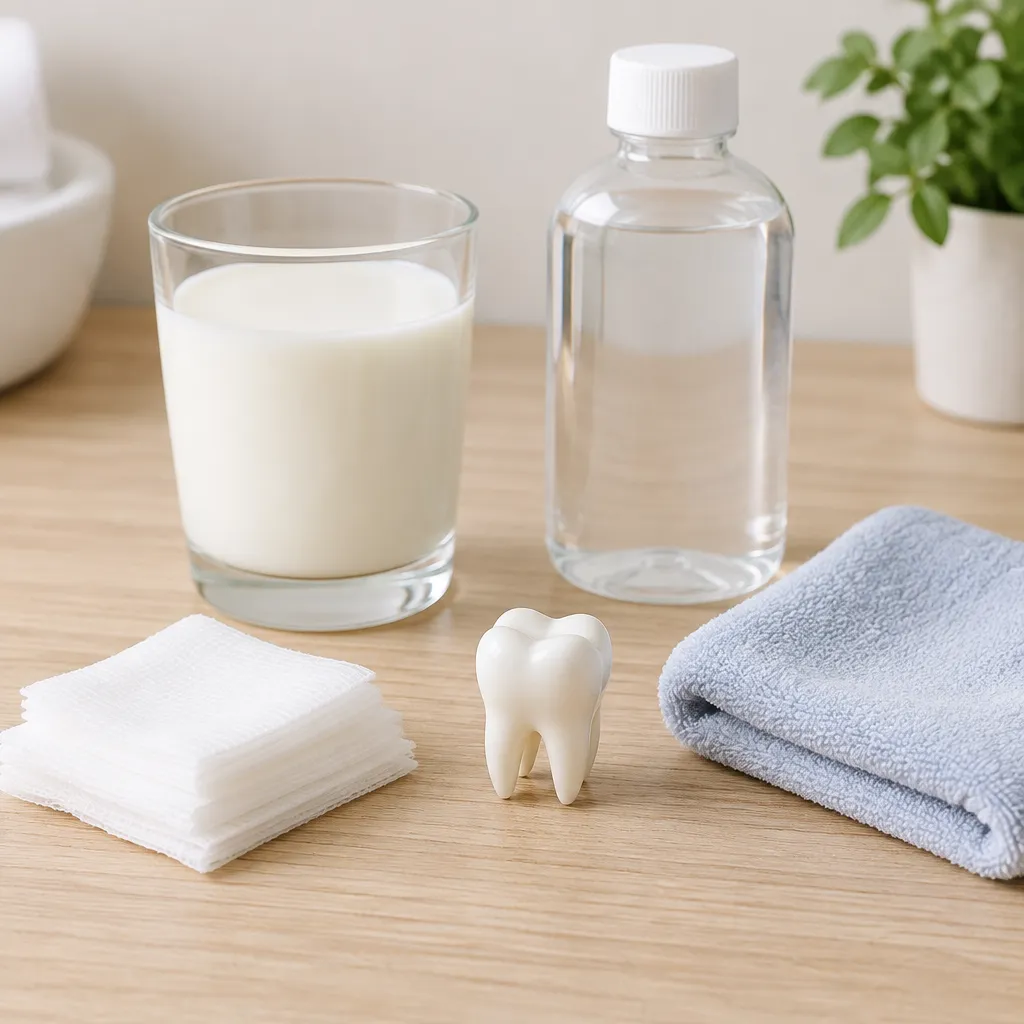
Pick up the tooth by the crown, the white part, and avoid touching the root surface. If the tooth is dirty, rinse it briefly with milk or saline, without scrubbing or removing any attached tissue. If the patient is alert and cooperative, gently reposition the tooth into the socket and have them bite on gauze to hold it in place while traveling to the office.
If reimplantation is not possible, store the tooth in cold, whole milk or in the patient’s own saliva, and keep it moist during transport. Plain water is a poor storage medium because it causes osmotic stress to the periodontal cells. Patients who have a dental plan through a rescue kit may also use a commercial storage product, but milk is widely available and practical during the holidays.
Extruded, intruded, and luxated teeth
An extruded tooth is partially dislodged from its socket and looks longer than its neighbors. An intruded tooth has been pushed into the bone and may appear shorter. Luxated teeth are loosened without complete displacement. None of these should be repositioned by the patient unless the tooth is fully out and reimplantation is the plan, since forcing a tooth back into an intruded socket can damage the root and the surrounding bone.
Baby teeth are managed differently from permanent teeth, and reimplantation of a primary tooth is generally not attempted because of the risk to the developing permanent tooth beneath it. Parents should call the office rather than attempting any repositioning at home. The priority is to control bleeding, reduce swelling, and have the child evaluated promptly.
Restorations That Come Loose
Crowns, fillings, bonded composites, and veneers are common sources of holiday emergencies, especially when hard candies, nuts, or crusty bread place unexpected load on existing restorations. A dislodged restoration is rarely painful at first, but the exposed tooth structure underneath is vulnerable to rapid breakdown, sensitivity, and contamination. The longer the tooth remains open, the more likely the restoration cannot be reused.
Lost crowns and what the exposed tooth is telling you
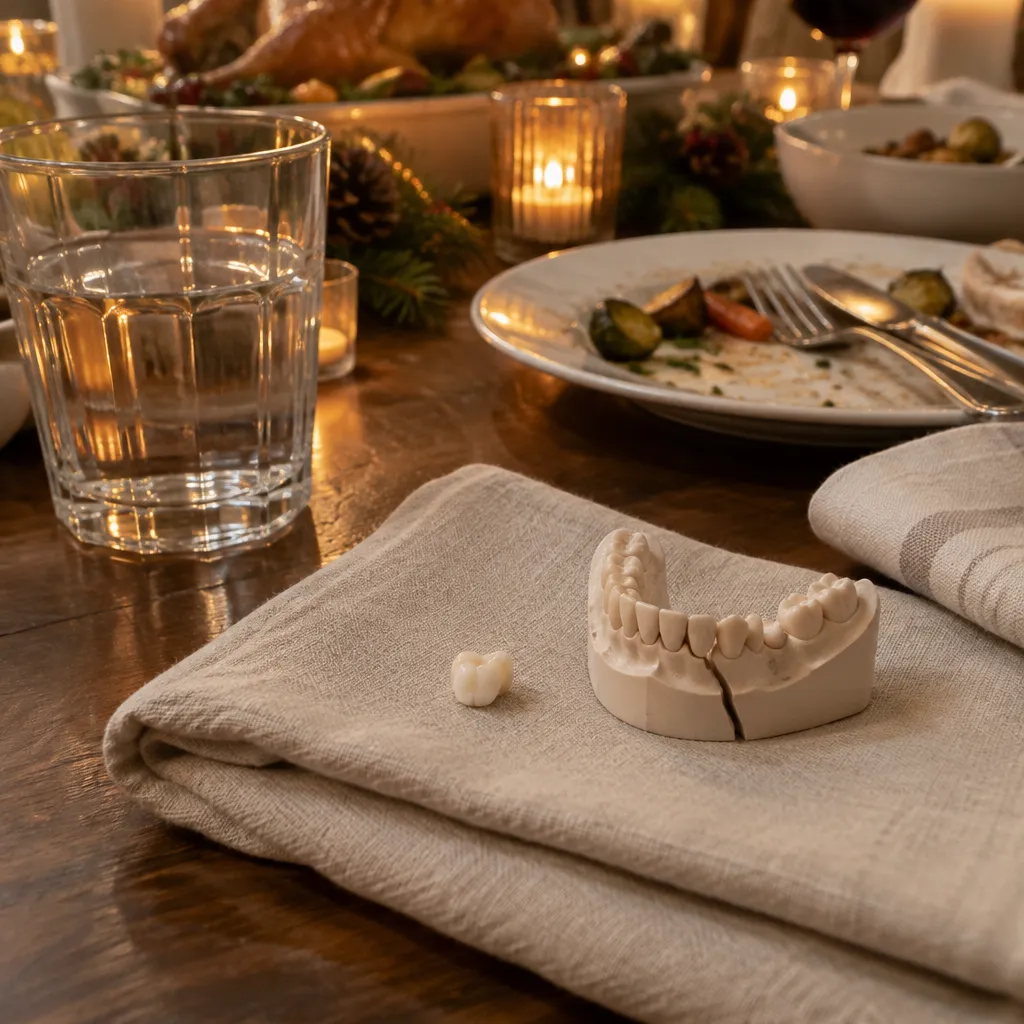
A lost crown exposes a prepared tooth that has been reduced to accept the restoration, so it is typically sensitive and fragile. Keep the crown in a dry container and bring it to the office. Do not reseat it with denture adhesive or toothpaste, since neither is designed to hold a crown and both can contaminate the preparation. Eating on the side of the lost crown increases the risk of fracture, so use the opposite side until the tooth is treated.
Sometimes the crown is intact but the underlying tooth has fractured or decayed beneath it. In those cases the dentist will need to assess the remaining structure before recementing anything. Our practice offers dental crowns in Newburgh, NY and will confirm whether the existing crown can be reused or must be replaced.
Fillings, bonding, and veneers
A lost filling typically leaves a cavity that is open to bacteria and food. Dental bonding that has chipped off can often be repaired with composite in a single visit if the margins are intact. Veneers are more vulnerable at their edges, and a debonded veneer may require reattachment or replacement depending on how much enamel remains. Patients who want a longer-term solution can review options in our overview of dental fillings in Newburgh, NY.
Soft Tissue Injuries and Bleeding
Lacerations of the lip, cheek, tongue, and gums bleed heavily because of the rich vascular supply, which makes them look more serious than they often are. The most important clinical question is whether the bleeding is controlled by direct pressure and whether the injury involves deeper structures. Lacerations that gape, contain debris, or involve the vermilion border often benefit from professional evaluation.
Lip, tongue, and cheek lacerations
Apply gauze with firm, continuous pressure for about 10 minutes before checking the wound. Repeated checking disrupts clot formation and restarts bleeding. Use a cold compress on the outside of the face to limit swelling, and rinse gently with warm water. Avoid acidic or spicy foods, which sting the tissue and interfere with healing.
Deep cuts that do not stop bleeding, puncture wounds, and injuries with embedded material need prompt medical evaluation. A tongue laceration can bleed substantially even when small, so patients should monitor for persistent bleeding and difficulty swallowing or speaking.
Persistent bleeding and infection signs
Bleeding from a tooth socket after an extraction or a traumatic injury can persist for longer than expected, particularly in patients who take anticoagulant medications. Report all medications when you call. Swelling that spreads into the face or jaw, fever, or a bad taste that persists may indicate a dental abscess, which Cleveland Clinic lists among dental emergencies. Abscessed teeth need drainage and definitive treatment, often root canal treatment, rather than pain medication alone.
Pro tip: Do not wait for swelling to resolve before calling. A swelling that is increasing after several hours indicates an active infection, and antibiotics alone will not eliminate the source.
Holiday Timing and After-Hours Access
Holiday schedules compress the window for care. Many injuries occur on evenings, weekends, or holiday closures, and patients often delay calling until the pain becomes unmanageable. The result is an injury that is harder to save, not because the dentist cannot treat it, but because the tissue has had more time to deteriorate. Planning ahead for the holiday period reduces that risk.
Calling the office and what to have ready
Our office is open Monday to Friday, 9:00 am to 5:30 pm, and emergency patients should call (845) 562-1108 during those hours. When you call, be ready to describe the injury, the time it occurred, any bleeding or swelling, the medications you take, and whether you have any known allergies. This information allows the team to prioritize your visit and prepare the right instruments and materials.
If you are outside office hours and the injury involves a knocked-out tooth, uncontrolled bleeding, or facial swelling, do not wait until the office opens. Follow the instructions in the message, and go to an emergency department if the situation worsens. For serious medical emergencies, call 911.
Planning ahead for the holiday period
Before travel or a large family gathering, make sure you know the office phone number, have a basic storage container for a knocked-out tooth, and have over-the-counter pain relievers on hand. Patients who are uninsured or underinsured can review our in-office dental plan, which includes 2 diagnostic exams, 2 routine X-rays, 2 dental cleanings, and 15% off all services. Plan terms and conditions apply, so call the office for details before enrolling.
Patients from Newburgh, Beacon, New Windsor, Balmville, and surrounding communities often benefit from scheduling a routine evaluation before the holidays. A pre-holiday examination identifies weakened restorations, cracked cusps, and failing margins that are more likely to break under the increased chewing load of holiday meals.
Comparing Temporary and Definitive Treatment
Home measures stabilize an injury until the dental visit, but they do not restore function or prevent further damage. The appropriate definitive treatment depends on the size of the defect, the vitality of the tooth, and the remaining tooth structure. The table below compares the three most common approaches for injuries seen after the holidays.
| Approach | When It Fits | Limitations |
|---|---|---|
| Home stabilization (saving fragments, rinsing, cold compress, soft diet) | Immediately after the injury, until the appointment | Does not restore the tooth or prevent further fracture. Fragments may be contaminated or lost. |
| Direct composite bonding or fillings | Small chips or fractures with sound margins, typically completed in one visit | Composite wears faster than enamel and may stain. It is less predictable on large defects that carry heavy occlusal load. |
| Crown or veneer | Larger fractures involving cusps, or defects where the remaining structure cannot support a direct restoration | Requires more tooth preparation and typically a second visit. Cost and lab timing are greater than for direct bonding. |
Why a temporary fix can fail
Temporary materials are designed to protect the tooth for days, not months. Over-the-counter temporary cement and denture adhesive do not bond reliably to tooth structure, and they can trap bacteria beneath the restoration. Patients who delay definitive treatment after a temporary repair often need a more extensive procedure than they would have needed initially.
The most reliable path is a prompt assessment, followed by the least invasive restoration that the tooth can support. In practice, that means bonding when margins are intact, a crown when cusps are compromised, and endodontic therapy when the pulp is involved, regardless of how the tooth looks on the surface.
Frequently Asked Questions
Should I go to an emergency dentist in Newburgh, NY or an emergency room for a broken tooth?
For a broken, chipped, or dislodged tooth without facial fracture or airway involvement, a dental office is the appropriate first contact. Call (845) 562-1108 during office hours. If you have a broken jaw, uncontrolled bleeding, or breathing difficulty, go to an emergency room or call 911.
How long can a knocked-out permanent tooth stay out of the mouth?
There is no safe window that guarantees reimplantation, and the outcome worsens with each minute the root remains dry or exposed. Store the tooth in milk or saliva and contact a dentist immediately. Do not wait for symptoms to develop before seeking care.
Can I put a lost crown back on with dental adhesive?
Do not attempt this with household glue or denture adhesive. These products are not designed to hold a crown securely, and they can contaminate the prepared tooth. Keep the crown in a dry container, avoid chewing on that side, and schedule an appointment.
Is it normal for a tooth to be sensitive to cold after a chip?
Sensitivity after a chip usually means dentin is exposed, and the response typically diminishes as the tooth is restored. Sensitivity that becomes sharp, lingers after the stimulus is removed, or occurs spontaneously may indicate pulp involvement, and that warrants prompt evaluation.
Which over-the-counter pain relievers are safe after a dental injury?
Acetaminophen, ibuprofen, and naproxen can be taken as directed on the label, provided they are appropriate for you. Never place aspirin or any other painkiller directly against the gum or tooth, because it can burn the soft tissue. Confirm any medication with the office if you take blood thinners or have medical conditions.
Does your practice see patients who do not have dental insurance?
Yes. Our in-office dental plan for patients without dental insurance includes 2 diagnostic exams, 2 routine X-rays, 2 dental cleanings, and 15% off all services. Plan terms and conditions apply, so call the office for more information.
Have you had a holiday dental injury, or found a home measure that worked well for you? Share your experience with us, and let us know which steps were most useful.